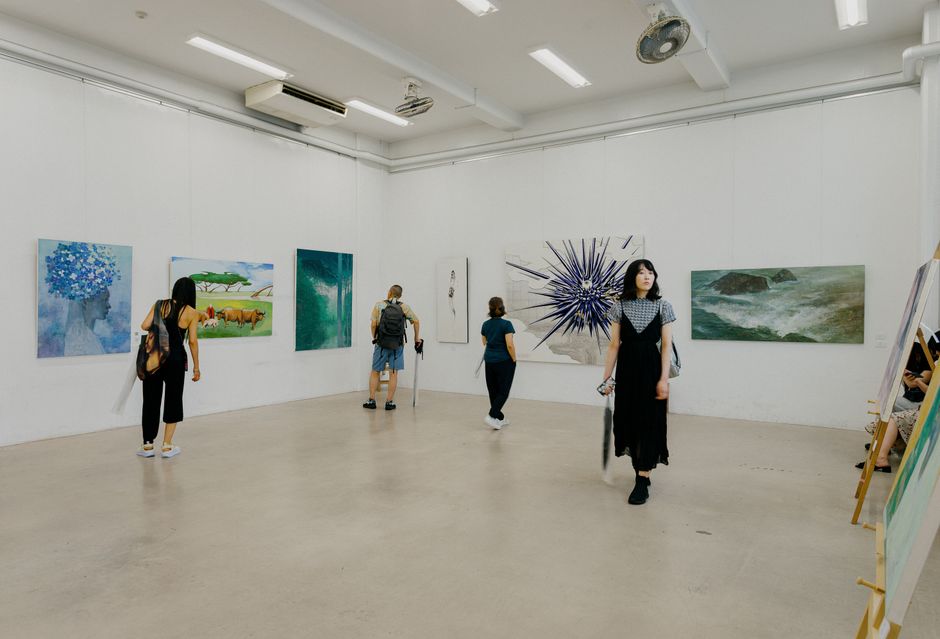
Canberra's cultural identity wasn't handed down from Canberra's planners when they drew the city's geometric streets in 1913. It was built—brick by brick, canvas by canvas, performance by performance—by a determined group of artists who arrived in the 1960s and 70s convinced they could transform a bureaucratic outpost into something culturally vital.
That conviction matters now. As Canberra grapples with population growth projections that will see the city swell from 465,000 residents today to over 750,000 by 2050, stakeholders are asking harder questions about what actually makes Canberra distinctive. Property developers have noticed the same thing. Real estate values in inner north suburbs like Ainslie and Dickson have climbed 32 per cent over the past five years, driven partly by creative professionals seeking the kind of affordable studio space and close-knit artistic communities that vanished from Sydney and Melbourne a decade ago. Understanding who built Canberra's scene—and how—might offer clues about preserving it.
From Griffin Centre Beginnings to Bohemian Ainslie
The story begins at the Griffin Centre. Originally a teacher training facility on Northbourne Avenue, the rambling brutalist complex became a magnet for visual artists in 1975 when a coalition of painters, sculptors and printmakers negotiated heavily subsidised studio space. The centre operated then as something between a squat and a sanctioned arts precinct—nobody quite kept track. By 1981, the Griffin Centre housed 47 working artists and had hosted Australia's first major video art exhibition. The rent for a ground-floor studio ran to $15 a week.
Parallel to that, Ainslie developed its own reputation. The tree-lined suburb's cluster of 1920s cottages attracted musicians and writers priced out of inner-city Sydney by the mid-1970s boom. Local venues like the now-defunct Ainslie Arts Centre, which operated from 1978 to 2004, became crucial testing grounds for Australian punk and new wave. The National Archives holds photographs from 1982 showing bands like Mental As Anything performing to crowds of 80 or 90 people squeezed into the centre's converted front room. Those performances directly led to record deals and national touring circuits.
Tom Keneally, among others, has spoken about how that period's creative intensity felt almost accidental—a function of cheap rent and geographic isolation from the eastern seaboard's cultural gatekeepers. Isolation forced self-sufficiency. Artists in Canberra couldn't wait for validation from Sydney. They built their own galleries, their own venues, their own networks.
The Numbers Behind the Scene
The Australian Bureau of Statistics counted 2,847 people identifying as artists or designers working in Canberra as of 2024—a 41 per cent increase from 2014. The Australian National University's School of Cybernetics, opened in 2023, explicitly recruited artists and designers as core faculty, signalling a shift toward recognising creative practice as intellectual work rather than cultural entertainment.
But here's the tension. Commercial property values have risen so sharply that the economic model sustaining the scene—cheap studio space, DIY venues, informal networks—is vanishing. A studio in the Griffin Centre today rents for $450 to $650 monthly, making it unaffordable for early-career artists. The ACT government's Cultural Facilities Plan, released in 2024, acknowledges the problem but offers limited solutions beyond grant programs and zoning reviews.
Anyone serious about preserving what makes Canberra's cultural identity distinct needs to think about housing costs immediately. That means advocating for dedicated artist housing, enforced below-market-rate commercial leases in high-demand areas like Dickson and Ainslie, and protection for existing creative communities before property speculation prices them out entirely. The people who built Canberra's scene did so because they had nowhere else to go. If affordability disappears, so does the friction that produces cultural innovation.