lifestyle
Canberra's parks aren't free – here's what it costs and where to go
As property prices cool and families reconsider their budgets, understanding the real expense of outdoor spaces matters more than ever.
4 min read
Updated 11 h ago
lifestyle
As property prices cool and families reconsider their budgets, understanding the real expense of outdoor spaces matters more than ever.
4 min read
Updated 11 h ago
Canberra residents treating their local parks as free recreation are in for a reckoning. While the city's 3,400 hectares of green space may feel endlessly accessible, accessing them properly – whether you're parking a car, hiring equipment, or grabbing a coffee – carries costs that add up fast for families already tightening their belts.
The shift matters now because household finances across Australia have tightened considerably. First home buyers are delaying purchases as property markets cool, and renters are stretching to cover rising living costs. When families do venture outdoors, understanding the real expense of recreation helps them budget properly and choose spaces that fit their finances, not their Instagram feeds.
Start with parking. The National Capital Authority manages parking across major reserve areas including Commonwealth Park, the lakeside precinct, and the Canberra Region Botanic Gardens in Weston. A full day's parking at Commonwealth Park costs $15 after 10am, though staying under two hours runs $5. That's before you've stepped out of your vehicle. The Botanic Gardens charges $11 per car, or $55 for an annual pass if you plan repeat visits – the maths work out to roughly five visits before the pass pays for itself.
Once you're through the gates, food and beverage costs escalate quickly. The Lake Burley Griffin precinct has multiple venues. A basic coffee at one of the lakeside cafes runs $5.50 to $6.50, while lunch from casual operators ranges from $18 to $28 per person. Families of four picnicking instead of buying food will save substantially, but then you're factoring in groceries.
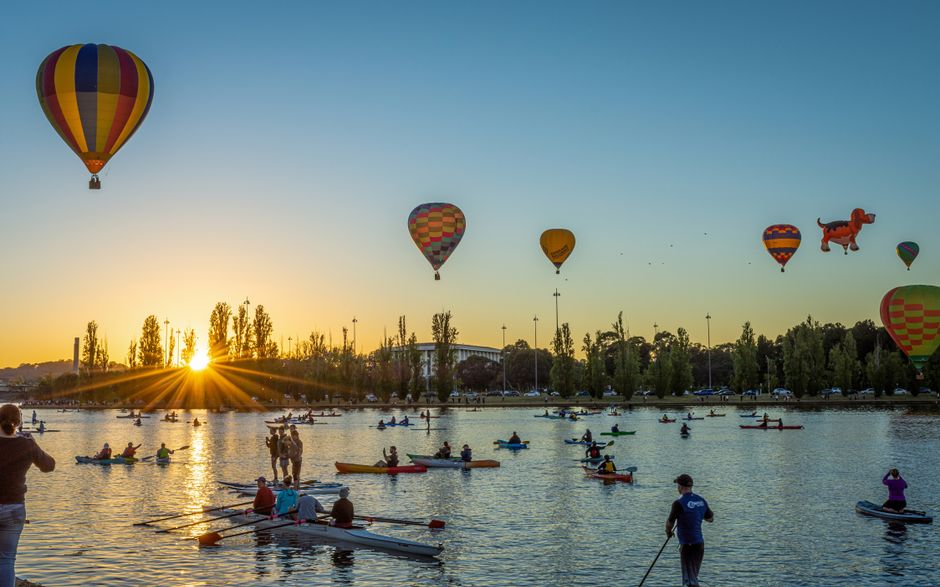
Equipment hire also chips away at budgets. The Canberra Rowing Club charges $35 per person for introductory learn-to-row sessions on the lake, while casual kayak rentals through commercial operators cost $25 to $45 per hour. Tennis court bookings through the ACT Sports and Recreation Service run $18 to $25 per hour depending on court quality and time of day. Playing free footy on an open field costs nothing, but accessing decent facilities has a price tag attached.
The Canberra Region Botanic Gardens – one of the territory's premier outdoor spaces – provides a useful case study. Entry is $11 per vehicle, $8 for motorcycles, and $4 for cyclists. That's reasonable for a sprawling 52-hectare attraction with themed gardens, walking trails, and picnic areas. But a family of five driving there for a half-day outing will spend $11 on parking, perhaps $30 on lunch if they buy on-site, and potentially another $20 to $30 on a small gift or plant from the nursery. The outing totals $60 to $70 before you've accounted for fuel.
Not everything in Canberra's outdoor network requires payment. Tuggeranong Parkway's walking and cycling paths remain free, as do open ovals across suburbs like Woden, Belconnen, and Gungahlin. The free section of the Lake Burley Griffin circuit – accessible from several entry points including near the Questacon precinct – works for walking and jogging without parking fees if you don't mind finding street parking on Constitution Avenue.
Data from the ACT Government's 2024 parks and recreation review showed that 73 percent of Canberra residents use public open spaces monthly, yet only 31 percent were aware of specific fees associated with major reserves. That gap matters. A household budgeting $50 monthly for outdoor recreation might assume that covers unlimited park access when in reality one visit to a managed reserve plus a couple of cafe stops consumes the entire allocation.
Before heading out, check the National Capital Authority website for current parking fees and reserve conditions. Bring your own food and water rather than relying on commercial venues. Consider annual passes if you're a frequent visitor – the Botanic Gardens pass pays for itself, and similar schemes exist for other major facilities. Families serious about outdoor living without breaking the budget should prioritise the free precincts and save paid reserves for occasional special outings.
About this article
Published by The Daily Canberra
Spread the word
Daily brief
Free, in your inbox before 7am. Weekdays.
The Daily Network — local news across Australia