policy
Ljubljana's New Rules Push Up Shop Costs in 2026
Municipal and national compliance rules take effect this year, raising expenses for small traders that could drive up prices at markets, cafes and local shops.
4 min read
Updated 2 h ago
policy
Municipal and national compliance rules take effect this year, raising expenses for small traders that could drive up prices at markets, cafes and local shops.
4 min read
Updated 2 h ago
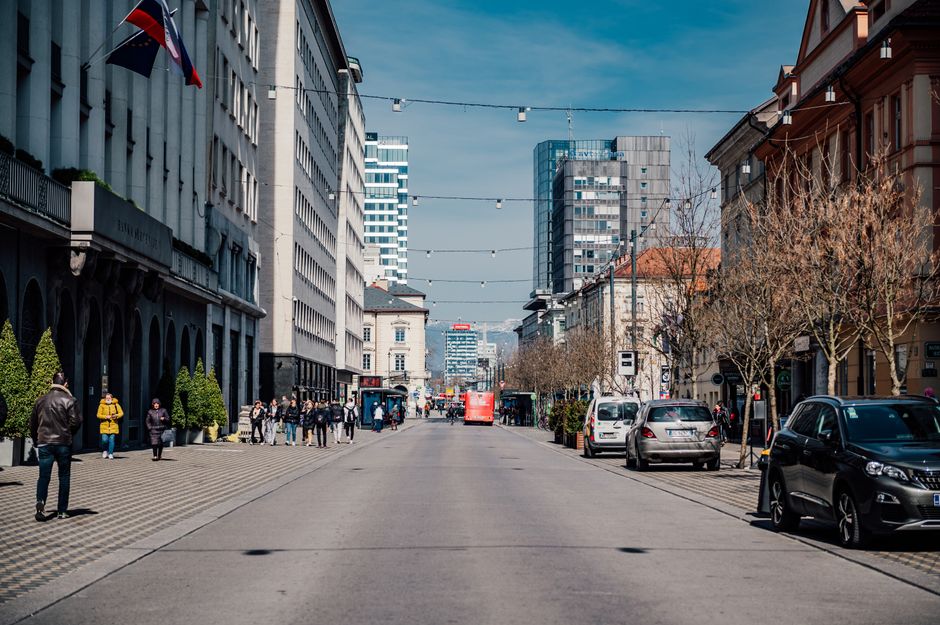
Ljubljana's small businesses are operating under a new regulatory framework in 2026, with changes spanning waste management fees, digital invoicing requirements and revised trading-hour rules for city-centre vendors. The measures, introduced through a combination of the Slovenian government's updated Fiscal Verification Act amendments and Ljubljana City Municipality ordinances passed in late 2025, apply to sole traders, micro-enterprises and hospitality operators across the city. For the roughly 14,000 registered small and micro businesses in Ljubljana, the practical burden arrives at a difficult moment: Slovenian consumer prices rose 4.2 percent year-on-year in the first quarter of 2026, according to the Statistical Office of the Republic of Slovenia (SURS).
The timing matters because household budgets in Ljubljana were already compressed before these rules kicked in. The average net monthly wage in Slovenia reached approximately 1,380 euros in early 2026, but housing and utility costs in the capital have climbed steadily, leaving many residents with less discretionary spending than the headline wage figure suggests. When businesses face higher running costs, the standard response is to pass some portion on through prices. Policy analysts at the Institute of Macroeconomic Analysis and Development (UMAR) have noted that compliance costs in the micro-business sector tend to feed through to retail and service prices within two to three quarters, particularly in food service and personal care.
The digital invoicing mandate, which became compulsory for all VAT-registered businesses from 1 January 2026 under amendments to the Zakon o davčnem potrjevanju računov, requires traders to transmit transaction data to the Tax Administration of the Republic of Slovenia (FURS) in real time via a certified e-invoicing system. Businesses that were previously using legacy cash-register software face one-off upgrade costs estimated by the Slovenian Chamber of Commerce and Industry (GZS) at between 300 and 800 euros per terminal, depending on the provider. For a single-owner coffee bar on Trubarjeva cesta or a market stall at Odprta kuhna, that is a meaningful outlay.
Ljubljana City Municipality also revised its communal waste fee schedule under the 2025 update to its communal infrastructure ordinance. The revised structure increases variable waste-collection charges for commercial premises by around 12 percent on average, with higher rates applying to food-service businesses that generate organic waste above specified thresholds. The municipality says the revision aligns fees more closely with actual collection and processing costs, and that revenue will go toward expanding composting infrastructure at the Snaga treatment facility in Ljubljana.
Local business associations, including the Ljubljana chapter of the Association of Small Businesses of Slovenia (Obrtno-podjetniška zbornica, OZS), have flagged that members in the Bežigrad and Šiška districts are most exposed, since those areas have a higher concentration of independent food traders and small repair shops with thinner margins. The OZS has submitted a formal request to the Ministry of Economy for a transitional subsidy scheme for micro-businesses, though no decision had been announced as of 4 July 2026.
For residents, the near-term effect is expected to show up in small increments across everyday purchases. A coffee that cost 1.80 euros at a neighbourhood kavarna last year is projected by several local operators to move toward 2.00 euros by the autumn. Vegetable vendors at Tržnica Vodnikov trg have told community groups they are reviewing pricing ahead of the autumn trading season. The government says the e-invoicing system will reduce tax evasion and generate additional public revenue that funds local services, including Ljubljana's subsidised public transport network, which carries around 100,000 passenger journeys on an average weekday.
What happens next depends partly on take-up support. The Ministry of Digital Transformation has announced a voucher program offering up to 200 euros per eligible micro-business toward certified invoicing software, with applications open through the Spirit Slovenia portal until 30 September 2026. Businesses that miss the deadline face full out-of-pocket costs. The Ljubljana City Municipality is holding a second public consultation on the communal fee structure in September, where operators and residents can formally submit observations before any further adjustments are considered for the 2027 fee schedule.
About this article
Published by The Daily Ljubljana
Spread the word
Daily brief
Free, in your inbox before 7am. Weekdays.
The Daily Network — local news across Australia