Property
Ljubljana Apartment Prices by Neighbourhood: Q1 2026 Data
Auction premiums and asking-price gaps reveal which Ljubljana neighbourhoods—Šiška, Vič, and beyond—show strongest buyer demand versus affordability gaps.
4 min read
Updated 2 h ago
Property
Auction premiums and asking-price gaps reveal which Ljubljana neighbourhoods—Šiška, Vič, and beyond—show strongest buyer demand versus affordability gaps.
4 min read
Updated 2 h ago
Ljubljana's residential property market logged its highest average apartment price on record in the first quarter of 2026, according to figures published by the Surveying and Mapping Authority of the Republic of Slovenia (GURS) in late June: €4,180 per square metre across the city, up roughly 8 percent year-on-year. That headline number, however, masks a neighbourhood-by-neighbourhood story that auction results and private-sale data are beginning to tell with unusual clarity.
The timing matters. Slovenia's central bank flagged in its May 2026 financial stability report that household mortgage volumes grew 11.4 percent in the twelve months to April, even as the European Central Bank held its deposit rate at 2.25 percent. More buyers are chasing credit. Fewer sellers are listing. The inventory squeeze, which was already visible in 2025, has pushed a growing share of transactions toward competitive bidding — meaning auction outcomes, not asking prices, are now the cleaner signal of where the market actually clears.
In the northern district of Šiška, four apartments sold through Dražbeni center Ljubljana, the city's main public auction house on Dalmatinova ulica, between January and May 2026. Three of the four closed at prices exceeding the court-ordered valuation by between 12 and 19 percent. That spread — between official valuation and final hammer price — is the clearest sign auctioneers and real-estate professionals point to when gauging genuine demand pressure.
Bežigrad, the largely residential quarter stretching north from Tivolska cesta toward the Sava river, is showing similar pressure in the private-sale market. Listings on Nepremičnine.net, Slovenia's dominant property portal, have been sitting on the market for an average of just 23 days in Bežigrad during Q2 2026 — compared with 41 days for the same period in 2024. Two-bedroom flats on Dunajska cesta, the district's main artery, are consistently achieving €270,000 to €310,000, a range that would have looked aggressive eighteen months ago.
The picture is more complicated in Vič, the largely residential neighbourhood southwest of the old town. Asking prices there crept above €4,000 per square metre for the first time in April, but days-on-market are running closer to 35 days, and several listings have been reduced by 5 to 7 percent before finding buyers. That divergence — strong asking prices but slower absorption — suggests sellers in Vič are testing rather than reflecting actual demand. Buyers who can read the auction data have leverage that asking-price watchers do not.
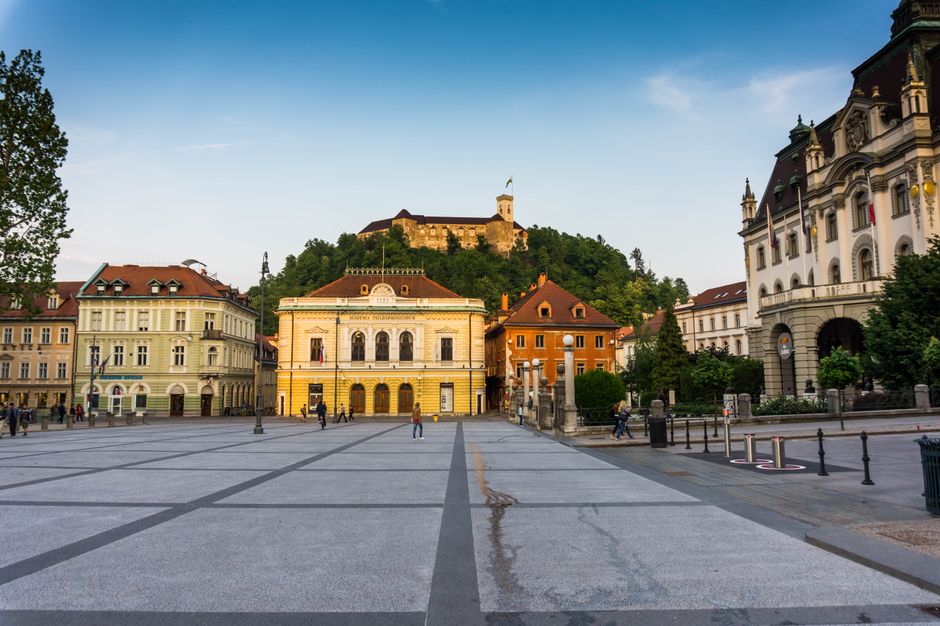
The area around Mestni trg and the narrow lanes climbing toward Ljubljana Castle remains the city's prestige market. Apartments in the medieval core routinely quote above €5,500 per square metre, and a refurbished 68-square-metre flat on Stari trg sold privately in March for €398,000 — €5,853 per square metre — according to the GURS transaction register. But transaction volume in the old town is thin; fewer than a dozen residential sales were recorded there in all of 2025. The prices are real, but they are not a liquid market.
For renters, the signal from the rental platform Stanovanjski sklad RS — the national housing fund, which manages a stock of subsidised flats across Ljubljana — is equally pointed. Its waiting list for affordable rental units crossed 2,800 applicants in June 2026, the highest figure the fund has published. Market rents for a standard two-bedroom apartment in Moste or Polje, the more affordable eastern districts, now routinely start at €950 per month, up from around €780 two years ago.
Buyers and renters who want to position themselves ahead of the autumn market — historically Ljubljana's busiest transaction season, running September through November — would do well to track the Dražbeni center Ljubljana auction calendar, which is published monthly on the court portal e-Dražbe, and cross-reference GURS transaction data for the specific cadastral district they are targeting. Asking prices, in this market, are increasingly a starting point rather than a destination.
About this article
Published by The Daily Ljubljana
Spread the word
Daily brief
Free, in your inbox before 7am. Weekdays.
The Daily Network — local news across Australia